Key Takeaways
- Hardwood needs gentle suction and soft brushes, not a beating action.
- Stiff bristles scratch finishes and fling debris across the floor.
- Soft roller brushes capture fine dust that suction alone leaves behind.
- Rubber wheels and felt edges protect delicate wood finishes.
- Wrong vacuum settings cause the scratches that ruin hardwood over time.
Hardwood floors add beauty and value to a home. However, they also punish the wrong cleaning tools. A vacuum built for carpet can scratch, dull, and damage wood finishes within months. The problem confuses many buyers. Surely stronger suction cleans better, right? On hardwood, that logic fails. As flooring and appliance specialists at //bestvacuumcleaner.us/ often point out, wood needs a completely different balance of airflow, brush action, and machine design than carpet ever does.
Hardwood presents two cleaning jobs at once. First, loose surface debris must come up quickly. Second, fine dust must lift before grit grinds into the finish underfoot. Therefore, the right vacuum handles both without ever touching the wood harshly.
This guide explains how suction and brush design work on hardwood. You will learn why stiff bristles damage wood, how soft rollers capture dust, and which features protect your finish. Additionally, you will learn the settings and habits that keep hardwood looking new.
How Hardwood Cleaning Differs From Carpet
Carpet hides dirt inside its fibers, so vacuums need strong beating action to shake it free. Hardwood is the opposite. Dust sits on a flat, sealed surface where airflow lifts it easily. Consequently, carpet-style cleaning becomes unnecessary and even harmful.
The real enemy on hardwood is grit. Tiny particles of sand and dust land on the floor and sit there. Every footstep then grinds that grit against the finish. Over time, this friction dulls the shine and leaves micro-scratches. According to the National Wood Flooring Association, grit control is one of the most important steps in protecting wood floors.
Therefore, hardwood cleaning focuses on removing grit before feet find it. That goal needs frequent, gentle cleaning rather than rare deep cleaning. A quick daily pass protects the finish better than a weekly heavy session.
Here is how the two floor types compare:
- Carpet: dirt sinks into fibers and needs agitation to release.
- Hardwood: dust rests on top and lifts with airflow alone.
- Carpet tools: stiff bristles beat the pile to loosen deep dirt.
- Hardwood tools: soft surfaces wipe dust up without scratching.
Scratch risk changes everything. Carpet tolerates any brush because fibers absorb the impact. Wood, however, records every hard contact. A spinning stiff brush leaves thousands of tiny marks per minute. Consequently, the brush design matters more than any other spec on a hardwood vacuum.
Weight matters too. Heavy upright vacuums press down on small wheels. Those wheels roll over grit and drag it across the finish. Therefore, machine design, not just the brush, decides long-term floor safety.
Why Suction Settings Matter on Wood Floors
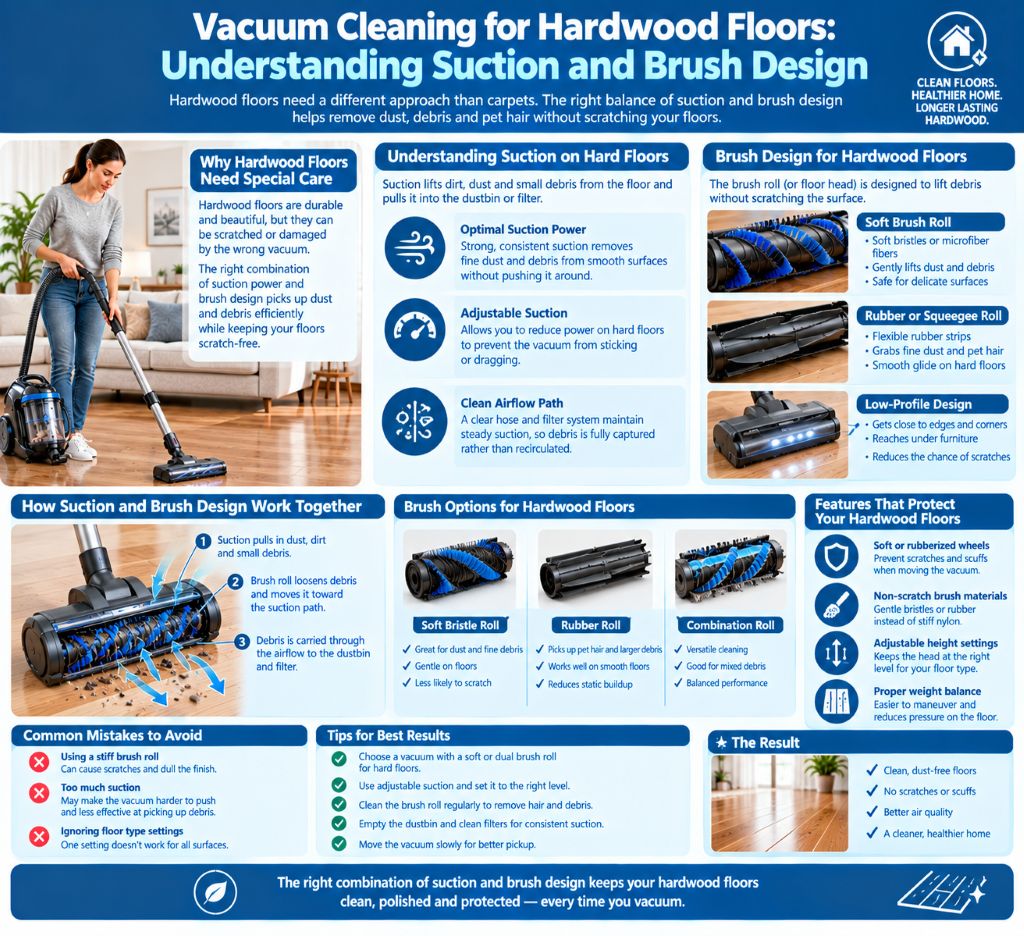
Suction strength is a tool, not a goal. On hardwood, moderate suction collects surface debris efficiently. However, maximum suction causes problems that surprise many owners.
The strongest setting pulls hard at the floor. On flat surfaces, this creates a seal effect. The head sticks to the wood, becomes hard to push, and drags across the finish. Consequently, high suction on hardwood creates friction rather than cleaning power.
Maximum suction also lifts lightweight rugs and mats at the edges. The head grabs fabric and stalls the machine. Meanwhile, the sudden pull can drag a rug across the floor and scratch the wood beneath.
Here is what each suction level does on hardwood:
- Low setting: light debris pickup with effortless gliding.
- Medium setting: ideal daily balance for dust and crumbs.
- High setting: spot cleaning only, and it can seal to flat wood.
- Boost mode: avoid it on bare hardwood entirely.
Modern vacuums //bestvacuumcleaner.us/vacuum-cleaner/vacuum-cleaner-comparison/ often include automatic suction adjustment. Sensors detect floor type and reduce power on hard surfaces. Therefore, these models remove the guesswork entirely and protect the finish by default.
Airflow direction also affects results. Some heads channel air outward at the edges, which blows dust away before the suction captures it. The best hardwood heads pull air evenly across the opening. Consequently, dust enters the bin instead of scattering to the edges of the room.
Additionally, check the exhaust vent position on any vacuum. An exhaust pointed downward or sideways blasts dust off the floor ahead of the head. Hardwood-friendly designs vent upward or through the body instead.
Soft Roller Brushes: The Hardwood Specialist
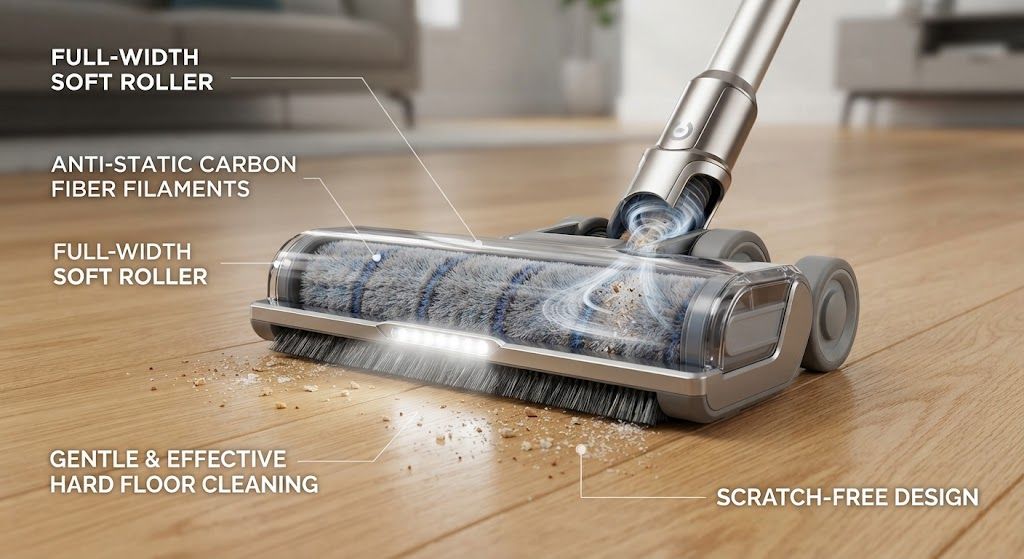
Soft roller brushes changed hardwood cleaning. Instead of stiff nylon bristles, these rollers use a fluffy, felt-like material. The soft surface wipes the floor rather than beating it. Consequently, fine dust sticks to the roller and enters the suction path.
This design solves hardwood floors‘ dustiest problem. Fine wood dust and pet skin flakes resist airflow because they cling to the surface with static. A soft roller physically wipes them loose. Meanwhile, suction carries them into the bin before they resettle.
Dyson popularized this design with its Fluffy head, and many brands followed. The roller works on multiple surfaces. It captures flour spills, pet kibble crumbs, and hair in a single pass.
Here is what soft rollers offer:
- Dust capture that bare suction leaves behind.
- No scratching, because soft material touches the floor.
- Debris pickup that bristles flick away.
- Quiet operation without bristle slap.
However, soft rollers have limits. They cannot deep-clean carpet because they lack beating action. Additionally, the fluffy material picks up moisture, so it never touches wet spills. Therefore, mixed-floor homes benefit from vacuums that swap heads quickly.
Maintenance stays simple. Pull large debris strands off the roller by hand. Additionally, some rollers rinse under cold water and need a full day to dry. Check your manual before washing.
For buyers, look for these hardwood head features:
- A soft roller or felt-style brush surface.
- Low profile that reaches under furniture.
- Edge-cleaning channels along both sides.
- A head light that reveals fine dust.
Additionally, ensure the head glides freely. Push the machine across a clean wood floor in the store. A good hardwood head should feel smooth, not sticky or dragging.
Machine Design Features That Protect Your Floor
The brush is only half the story. The rest of the vacuum contacts the floor too, and hard parts cause their own damage. Wheels, head edges, and even the body design decide whether your finish survives daily cleaning.
Wheels come first. Hard plastic wheels roll over grit and press it into the finish like tiny sanders. Rubber-coated wheels grip instead and roll grit-free. Consequently, premium hardwood vacuums use soft rubber wheels on every contact point.
Head edges matter next. A head with sharp plastic trim can gouge wood when you bump furniture or turn sharply. Felt or soft trim along the edges cushions these contacts. Therefore, look for padded base plates on any vacuum destined for wood.
Check these protective features before buying:
- Rubber-coated wheels on the head and body.
- Felt or soft trim along the head edges.
- Smooth underside with no exposed screws or ridges.
- Swivel steering that prevents dragging during turns.
- A light body weight that reduces grinding pressure.
Cordless stick vacuums often excel here. Their light bodies press less weight onto the floor. Additionally, their swivel heads turn without the pivoting drag that heavy uprights create. Consequently, many hardwood-heavy homes choose cordless machines.
Corded uprights can work on wood too, but with conditions. The brush must switch off or lift away from the floor. Additionally, the machine needs a hard floor setting that stops the beating action entirely.
Finally, protect your home layout as well as your machine. Vacuum area rugs with the beater bar off, because rug fringe tangles brushes. Additionally, lift the head over rug edges rather than ramming them, which protects both the fringe and the wood below.
Best Practices for Hardwood Vacuuming
Even the best vacuum performs poorly with the wrong technique. Hardwood rewards small habits that take seconds each. Build them into your routine, and the floor stays glossy for years.
Frequency comes first. Dust lands daily, so daily removal stops grit before feet grind it in. Therefore, a quick daily pass with a light vacuum beats a weekly deep clean for finish protection. According to the National Wood Flooring Association, regular dust removal is the single best maintenance step for wood floors.
Follow this hardwood cleaning routine:
- Vacuum or dust mop daily in high-traffic zones.
- Use medium suction and a soft roller or brush-off mode.
- Move slowly so the suction captures dust at the edges.
- Vacuum mats and rugs weekly with gentle settings.
- Clean under furniture weekly where dust collects unseen.
Direction also helps. Vacuum along the wood grain rather than across it. This alignment lets the head capture dust from the grain lines instead of skipping over them. Additionally, work toward the exits so you never walk back over cleaned areas.
Attachments finish the job. Use a soft brush tool along baseboards, where static holds dust. Meanwhile, a crevice tool handles the gaps beside trim and between planks where grit collects.
Avoid three common mistakes. Never vacuum wet spills, because moisture warps wood and clogs machines. Never run a beater bar on bare wood, because it scratches. Finally, never drag a stalled head, because a sealed suction head drags grit across the finish.
Frequently Asked Questions
Can I use a regular vacuum on hardwood floors?
Only with the brush turned off or a soft roller attached. Regular stiff bristles scratch the finish over time. Meanwhile, high suction settings can seal the head to the floor.
Do robot vacuums work safely on hardwood?
Yes, most modern robots clean wood safely. Look for rubber wheels, soft brushes, and a mopping avoidance feature. Additionally, choose models with drop sensors for stair safety.
Is vacuuming better than sweeping hardwood?
Vacuuming wins. Brooms push fine dust into the air and leave grit in grain lines. A vacuum with a soft roller captures dust instead of scattering it.
How often should I vacuum hardwood floors?
Daily in high-traffic areas, and at least twice weekly elsewhere. Dust lands every day, and grit does its damage underfoot between cleanings.
Why does my vacuum scratch my hardwood floor?
Common causes include stiff bristles, hard plastic wheels, and dragging a suction-sealed head. Switch to a soft roller, check the wheels, and lower the suction level.
Conclusion
Hardwood floors reward gentle, frequent cleaning with decades of shine. The right vacuum makes that easy. Moderate suction lifts surface dust, while a soft roller wipes away the fine grit that dulls finishes. Remember the three protection rules. Turn off stiff brushes, keep suction moderate, and check every floor contact point for hard plastic. These choices cost nothing but prevent the scratches no polish can fully undo. If you also need stronger cleaning for shedding pets, explore our guide to find the best upright vacuum for pet hair to choose a model that balances pet-hair pickup with floor protection.
Technique completes the system. Clean daily in busy zones, follow the grain, and use soft tools along baseboards. Additionally, never drag a stuck head across the wood.
Inspect your vacuum today. Flip the head over and look at the brush and wheels. If you see stiff bristles or hard plastic, order a soft roller before your next cleaning session. Your floors will keep their factory shine for years to come.