
Ever crave a bathroom that feels like a forest retreat? Biophilic design bathrooms blend nature with modern comfort. They use natural materials, light, and plants to create calming spaces. This design trend boosts mood and wellness. It’s perfect for urban homes needing a nature escape. Ready to transform your bathroom? Let’s explore how biophilic design works.
What Is Biophilic Design?
Biophilic design connects people with nature. It uses natural elements, light, and textures in spaces. Bathrooms become serene with this approach. The goal is to improve cognitive function and mood. Studies show nature-inspired spaces reduce stress. Biophilic bathrooms incorporate organic materials, water features, and plants. They mimic natural environments for relaxation.
Why Choose a Biophilic Design Bathroom?
Biophilic bathrooms offer more than beauty. They create wellness-focused spaces. Here’s why they’re trending:
- Boosts Mood: Natural elements have mood-boosting properties.
- Improves Wellness: Designs support circadian systems for better sleep.
- Eco-Friendly: Uses sustainable materials like reclaimed wood and stone.
- Versatile: Fits urban areas or spacious homes.
- Timeless Appeal: Nature-inspired designs stay stylish.
Key Elements of a Biophilic Design Bathroom
Biophilic design relies on specific elements. Each adds to the natural feel. Let’s break them down.
Natural Materials
Natural materials define biophilic bathrooms. They bring warmth and texture. Popular choices include:
- Reclaimed Wood: Adds rustic charm with oak beams or water-resistant wood.
- Natural Stone: Udaipur marble, Kota stone, or Rajula stone create elegance.
- Terracotta Tiles: Warm, earthy tones for floors or walls.
- Reclaimed Marble Basins: Unique, sustainable sink options.
- Stone Surfaces: Variegated surfaces add organic textures.
These materials feel authentic. They connect your bathroom to nature.
Natural Light
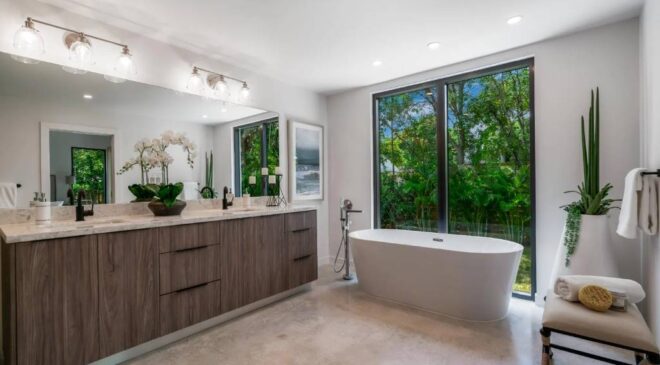
Natural light transforms bathrooms. It mimics outdoor settings. Sunlit series fixtures or large windows work well. Backlit mirrors enhance brightness. Natural lighting supports circadian systems. It creates a calming atmosphere. Consider linen curtains for soft light filtering.
Indoor Plants and Living Walls
Plants bring life to bathrooms. Snake plants thrive in low light. Living walls add lush greenery. Indoor plants purify air. They create a spa-like vibe. A foliage mural can mimic plants if maintenance is a concern.
Water Features
Water features evoke tranquility. Rainfall showers or rain showers mimic nature. Freestanding tubs or soaking tubs offer luxury. Water-efficient fixtures save resources. An outdoor shower connects you to the elements. Water therapy enhances relaxation.
Organic Textures and Forms
Organic textures feel natural. Think linen curtains or waterproof wallpaper. Black subway tiles or sandy beige tiles add depth. Organic forms in furniture soften sharp edges. These elements create a cohesive look.
Nature-Inspired Colors
Colors matter in biophilic design. Earthy tones like beige, green, or brown work best. Turquoise from brands like Turquoise The Bath Couture adds vibrancy. Spanish and Moroccan design influences bring warmth. Wabi sabi aesthetics embrace imperfection for a natural feel.
How to Create Your Biophilic Design Bathroom
Ready to start? Follow these steps to build your dream bathroom.
Step 1: Plan Your Space
Assess your bathroom’s size. Small powder rooms can still feel natural. Larger spaces suit freestanding tubs or walk-in showers. Consider a bathroom terrace for outdoor vibes. Work with an interior designer for expert advice.
Step 2: Choose Natural Materials
Select sustainable materials. Reclaimed stone or wood adds character. Rajula stone or terracotta tiles are durable. Clé tile offers unique patterns. Tile of Spain provides eco-friendly options. Consult a kitchen designer for cohesive home design.
Step 3: Add Natural Light
Maximize light with windows or skylights. Backlit mirrors brighten small spaces. Sunlit series fixtures enhance ambiance. Natural light lifts mood and wellness.
Step 4: Incorporate Plants
Add indoor plants like snake plants. Living walls create a bold statement. Low-maintenance options suit busy lifestyles. Foliage murals offer a no-maintenance alternative.
Step 5: Install Water Features
Choose water-efficient fixtures. Rainfall showers or outdoor showers feel luxurious. Freestanding tubs add elegance. Soaking tubs promote relaxation. Brands like Delta Faucet Company offer stylish options.
Step 6: Use Organic Textures
Incorporate natural textures. Waterproof wallpaper or linen curtains add softness. Sandy beige tiles or black subway tiles create contrast. Variegated surfaces feel organic.
Step 7: Embrace Wellness Design
Focus on wellness. Heated floors keep spaces cozy. Dual sinks add functionality. Water therapy features like rain showers boost relaxation. Work with an environmental strategist for sustainable choices.
Biophilic Bathroom Trends for 2025
Bathroom trends evolve yearly. Biophilic design remains a top choice. Here are 2025’s highlights:
- Maximalist Wallpapers: Bold, nature-inspired patterns.
- Tropi-Core Fantasy: Vibrant, tropical vibes.
- Wellness Bathrooms: Spaces prioritizing health and calm.
- Indoor-Outdoor Decorating: Blending indoor and outdoor elements.
- Spanish and Moroccan Design: Warm, cultural influences.
Experts like Sujay Reddy and brands like Aquant India lead these trends. Omnia by Nestates offers premium fixtures. Wall n Floor provides sustainable tiles.
Benefits of Biophilic Design Bathrooms
Biophilic bathrooms offer unique benefits. They improve mental and physical health. Natural elements reduce stress. Organic materials are eco-friendly. These spaces feel timeless. They suit urban areas or rural homes. Views or imagery of nature enhance the experience.
Challenges and Solutions
Biophilic design has challenges. Here’s how to address them:
- Cost: Natural materials can be pricey. Use reclaimed wood or stone for savings.
- Maintenance: Plants need care. Choose low-maintenance snake plants.
- Space: Small bathrooms limit options. Use foliage murals or compact fixtures.
- Durability: Ensure water-resistant wood or waterproof wallpaper for longevity.
Expert Tips for Success
Want a flawless biophilic bathroom? Follow these tips:
- Work with an NKBA Certified Master Kitchen & Bath Designer.
- Use water-efficient fixtures for sustainability.
- Mix direct and indirect nature elements for balance.
- Incorporate the Four Elements: earth, water, air, and fire.
- Focus on space and place conditions for harmony.
Explore Also: The Ultimate Guide to Crafting Stunning Epoxy Countertops
FAQs
What is a biophilic design bathroom?
A biophilic design bathroom uses natural materials, light, and plants. It creates a calming, nature-inspired space.
How do I add biophilic elements to a small bathroom?
Use snake plants, backlit mirrors, or foliage murals. Sandy beige tiles or linen curtains add natural textures.
Are biophilic bathrooms expensive?
Costs vary. Reclaimed wood or stone reduces expenses. Water-efficient fixtures save money long-term.
What materials work best for biophilic bathrooms?
Reclaimed wood, Udaipur marble, Kota stone, and terracotta tiles. Waterproof wallpaper and linen curtains add texture.
Why is biophilic design popular for bathrooms?
It boosts mood, supports wellness, and uses sustainable materials. Natural elements create timeless, calming spaces.
Create Your Nature-Inspired Oasis
Biophilic design bathrooms blend nature and comfort. They use natural materials, light, and plants. These spaces boost wellness and mood. From reclaimed wood to rainfall showers, every element counts. Ready to transform your bathroom? Start with small changes like snake plants or sandy beige tiles. Work with an interior designer for a cohesive look. Share your dream bathroom ideas in the comments or contact a designer today!
References
- Biophilic Design Guide: https://www.biophilic-design.com
- Sustainable Materials: https://www.greenbuilding.com
- Tile of Spain: https://www.tileofspainusa.com
- Delta Faucet Company: https://www.deltafaucet.com
- NKBA Certification: https://www.nkba.org