
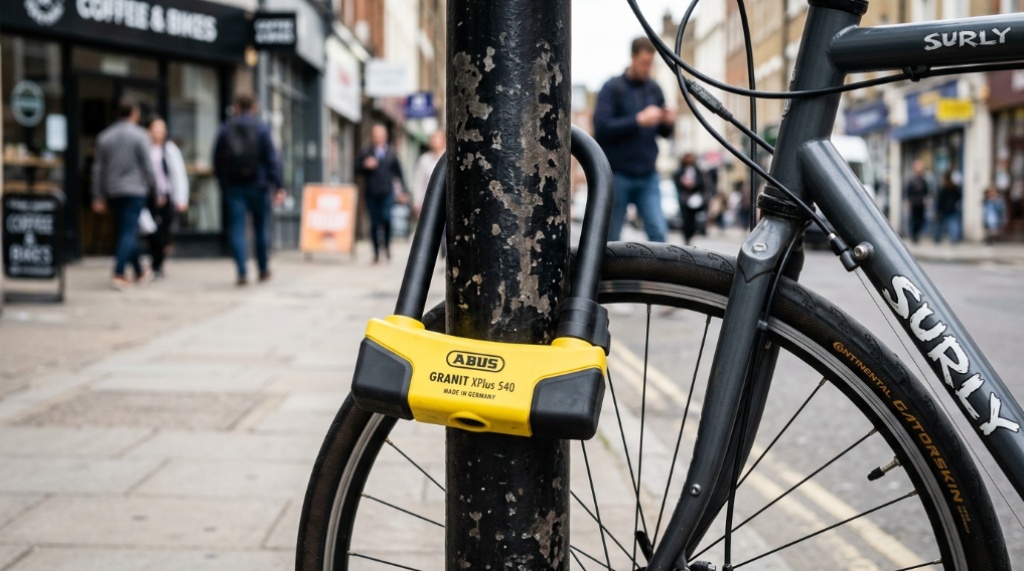
Two bikes, one rack, and a single cable that suddenly feels far too short — that is the moment most riders realize their locking strategy needs work. Securing more than one bike is a different problem than locking a single frame to a post, and it forces you to think about cable routing, lock capacity, and what each lock can realistically protect. If your setup runs on a combination cable, the Master Lock bike lock cable setup and resetting guide is worth reading before you build a multi-bike plan, because knowing your combination and cable length limits changes what strategy actually works.
Quick Answer
The most reliable way to secure multiple bikes is a layered approach: one high-security U-lock or chain through the frames of as many bikes as possible and the rack, plus a secondary cable or second U-lock capturing the remaining frame and any quick-release wheels. No single cable can protect everything at once, so use the strongest lock on the most valuable connection point and treat cables as a supplement, not the primary defense.
Key Takeaways
- Lock the frames together first, then add wheels and accessories — cables alone are the weakest link and should never be your only protection.
- Match lock type to the situation: two U-locks or a heavy chain plus a cable beats one long cable every time, even if the cable feels convenient.
- Know your cable’s real length and combination limits before you leave home, since a cable that is too short forces you into weaker locking positions.
- Removing a wheel, seat post, or accessory takes seconds and eliminates the need to lock it in place.
- Lock to something immovable and, where possible, keep the lock body off the ground so it cannot be smashed or leveraged.
Why Locking Two Bikes Is Harder Than Locking One
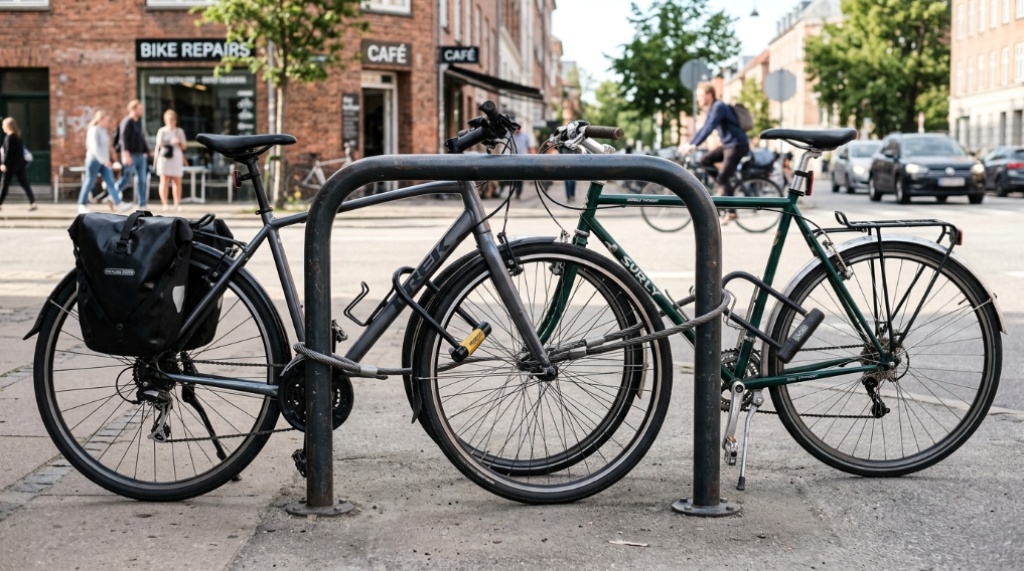
With one bike, you find a solid anchor, thread a lock through the frame, and you are done. With two bikes, every option involves a compromise. A single long cable can loop through both frames and the rack, but long cables are easier to cut because a thief has more slack to work with and does not need to sever the whole loop — just one section. A single U-lock usually cannot reach around two frames and a fixed object at the same time.
That is why the practical answer is not one clever lock but a small system. The system has three jobs: attach both bikes to something immovable, ensure the frames cannot be separated and carried off individually, and protect the parts that are easy to unbolt and resell.
Choose the Right Lock Combination for Two Bikes
There is no universal best lock, but there are patterns that consistently outperform others. The table below shows how common combinations behave when you need to secure two bikes.
| Setup | Protection Level | Best For | Main Trade-Off |
|---|---|---|---|
| One long cable through both frames and rack | Low | Quick stops in low-risk areas | Long cable slack makes cutting easier |
| One U-lock plus one cable | Moderate | Two bikes, one high-value frame | U-lock protects only one frame directly |
| Two U-locks, one per bike | High | Urban parking and overnight storage | Weight and cost roughly double |
| Heavy chain plus cable | High | Longer stops, shared anchor | Chains are heavy to carry |
| U-lock, chain, and cable combined | Very high | Expensive bikes left for hours | Bulk and setup time |
Pair a Strong Primary Lock With a Weak Secondary One
If you already own a sturdy U-lock, use it on the bike with the highest resale value, locked through its frame and the fixed anchor. Then use a cable to join the second bike’s frame to the first bike or the same anchor. The cable does not need to be the strongest link — it just needs to prevent someone from quietly walking the second bike away while the first bike stays secured, If you are planning a longer cycling trip or commuting to different terrains with your gear, you might also want to read about five key differences between a gravel bike and a road bike before choosing your ideal ride.
When Two U-Locks Make More Sense
If both bikes are valuable, two U-locks, each through a frame and the anchor, provide a cleaner guarantee than any single-lock-plus-cable arrangement. The downside is weight, cost, and the fact that a single anchor point may not physically accept two large lock shackles at once. Check your typical parking spots before committing to this setup.
A Step-by-Step Locking Sequence That Actually Works
The order in which you lock things matters, because the first connection you make is the hardest for a thief to undo. Follow this sequence:
- Position both bikes against the anchor. Get them as close as possible to reduce slack in every lock and cable.
- Attach the strongest lock first. Thread your primary U-lock or chain through the frame of the more expensive bike and around the fixed object.
- Connect the second frame. Use a cable or second lock to link the second bike’s frame to the first bike’s frame or to the same anchor.
- Capture quick-release wheels. If you have a second cable, pass it through the front and rear wheels of both bikes; otherwise remove the wheels and take them with you.
- Remove or lock accessories. Take seats, lights, and bags with you — they are the easiest items to steal and the least protected by any lock.
- Check for slack and leverage points. Push the lock body upward so it sits high in the shackle, away from the ground where it cannot be pried or hammered.
- Tug each bike once. A quick pull confirms every connection is tight and nothing will slide free.
Common Mistakes That Weaken a Multi-Bike Setup
Most multi-bike thefts are not the result of a single clever tactic. They come from avoidable gaps that the owner left open.
- Locking only through one frame. The second bike is then held by nothing but friction or a thin cable, which is trivial to snip.
- Running a long cable with too much slack. Extra length gives a thief leverage and lets them cut one low section rather than the whole loop.
- Leaving the lock on the ground. Locks resting on concrete can be struck against the pavement or pried with little effort.
- Relying on a combination lock without knowing the reset procedure. If you forget the code or need to change it, you should know how the mechanism works before you are stranded. Combination-based cables are also easier to defeat than keyed U-locks, so treat them as a secondary layer.
- Ignoring quick-release parts. Wheels, seats, and handlebar accessories disappear in seconds and are often worth more than the lock itself.
Matching the Strategy to the Situation
Your locking strategy should shift based on where and how long you are parking, not just what locks you own.
Short Stops in Low-Risk Areas
A single strong lock on the more valuable bike plus a cable linking both frames is usually enough for a quick coffee stop in a visible, busy location. Keep the stop short and park where you can see the bikes.
Urban Parking or Commuting
Use two independent locks if you can carry them, one per bike, both attached to a solid anchor. Add a cable for wheels if the bikes have quick-release hubs. This is the setup that holds up under repeated exposure.
Overnight or Long-Term Storage
Ideally, do not leave two bikes locked outdoors overnight at all. If you must, use a heavy chain and a U-lock together, remove every removable part, and choose a location that is well lit and covered by foot traffic or cameras.
Frequently Asked Questions
Can one lock secure two bikes?
Only if it is long enough to pass through both frames and the anchor. A single U-lock rarely reaches, so most people combine one U-lock with a cable that connects the second frame. This is convenient but weaker than two independent locks.
Is a cable lock enough for two bikes on its own?
No. Cables are the easiest lock type to cut, and a single cable holding two bikes means one cut frees both. Use a cable as a secondary layer behind a U-lock or chain, never as the only protection.
Should I lock the frames together or lock each bike separately?
Locking each bike to the anchor separately with its own lock is stronger. Locking the frames together is a useful secondary measure when you only have one strong lock, but it means both bikes depend on that single lock.
What should I do with the wheels?
Either remove them and take them with you, or run a cable through the wheels of both bikes. Quick-release wheels are a favorite target because they require no tools and resell easily.
Does the anchor point matter if I use strong locks?
Yes. A strong lock on a weak anchor — a thin signpost, a wooden fence, or a loose rack — fails just as fast as a weak lock on a strong anchor. Always check that the object is fixed, thick, and not easily cut or lifted.
How long should my cable be for two bikes?
Long enough to reach both frames and any wheels you want to protect without leaving excess slack. If the cable forces you to loop loosely, it is too long for the job and should be paired with a tighter primary lock.
Conclusion
Securing multiple bikes is less about finding one perfect lock and more about building a layered system. Put your strongest lock through the frame of the most valuable bike and the anchor, connect the second frame with a cable or second lock, and deal with wheels and accessories separately. Keep slack tight, keep the lock off the ground, and match the setup to how long you will be parked. A realistic plan that you actually follow beats an expensive lock used carelessly.


