DIY drain cleaning guide refers to a set of safe, practical, and step-by-step drain cleaning methods homeowners can use to remove clogs without calling a plumber or relying on harsh chemicals.
A slow-draining sink or a backed-up shower can turn a normal day into a frustrating one. Water pools. Odors rise. Panic follows. The good news? Most clogged drains are simple to fix using basic tools and smart techniques you already have at home.
This guide is built for real homeowners. No fluff. No risky shortcuts. Just proven, step-by-step drain cleaning solutions that actually work. You’ll learn how to identify the cause of a clog, choose the right method, and prevent future blockages using practical home plumbing tips.
Unlike chemical drain cleaners that can damage pipes and harm your health, this DIY drain cleaning guide focuses on safer, cost-effective methods. Whether it’s hair in the bathroom drain, grease in the kitchen sink, or mystery buildup slowing things down, this guide covers it.
If you want clear answers, actionable steps, and long-term prevention strategies, you’re in the right place.
What Causes Drains to Get Clogged in the First Place?
Most clogged drains are caused by gradual buildup of everyday materials like hair, grease, soap residue, and food particles.
Understanding the cause helps you choose the right step-by-step drain cleaning method.
- Bathroom drains: Hair, soap scum, toothpaste residue
- Kitchen sinks: Grease, oil, food scraps, coffee grounds
- Floor drains: Dirt, debris, lint
- Outdoor drains: Leaves, mud, roots
Clogs rarely happen overnight. They build slowly, which means early action can prevent expensive plumbing repairs.
How Can You Tell If a Drain Is Partially or Fully Clogged?
Early signs of a clogged drain include slow drainage, gurgling sounds, and unpleasant odors.
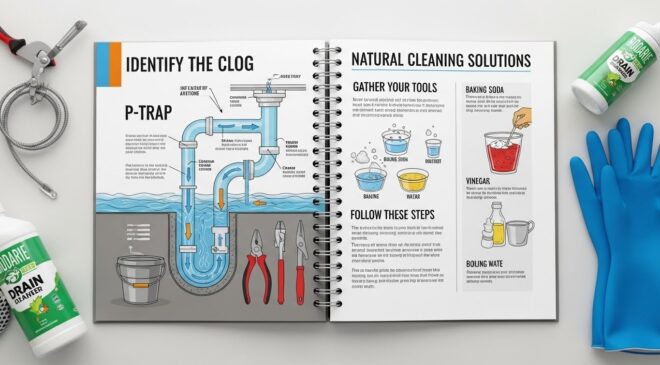
Ignoring these signals often leads to complete blockage. Watch for:
- Water draining slower than usual
- Bubbling or gurgling noises
- Standing water in sinks or tubs
- Recurring foul smells
- Water backing up from another drain
Spotting these signs early makes DIY drain cleaning easier and more effective.
What Tools Do You Need for Step-by-Step Drain Cleaning at Home?
Basic drain cleaning tools are affordable, reusable, and easy to use.
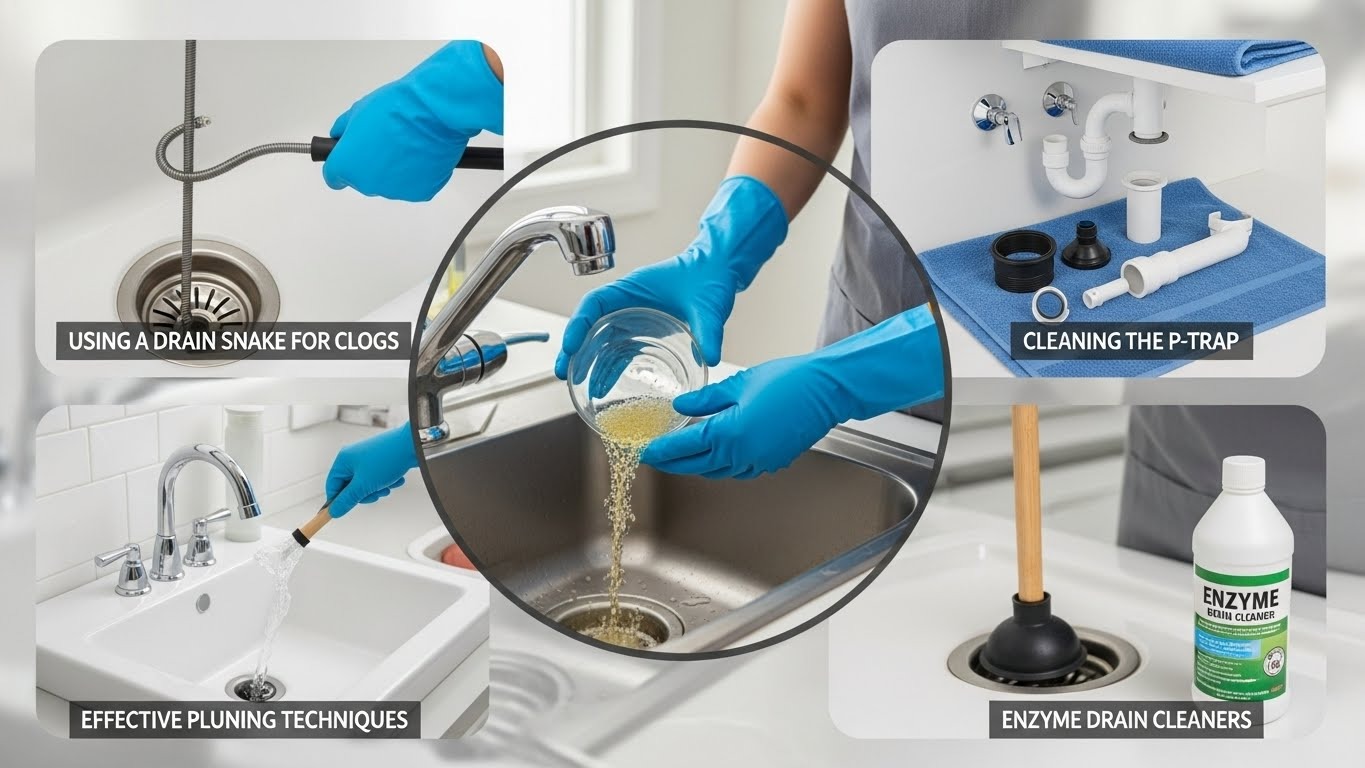
You don’t need professional equipment. Most DIY drain cleaning tasks require:
- Plunger (cup plunger for sinks, flange plunger for toilets)
- Drain snake or zip tool
- Baking soda and white vinegar
- Hot water or kettle
- Rubber gloves
- Old toothbrush or wire hanger
These tools form the foundation of most home plumbing tips and DIY fixes.
How Do You Clean a Clogged Sink Drain Step by Step?
The best step-by-step drain cleaning method for sinks starts simple and escalates only if needed.
Step 1: Use Boiling Water
Pour boiling water slowly down the drain. This works best for grease-related clogs.
Step 2: Baking Soda and Vinegar Method
- Pour ½ cup baking soda into the drain
- Add 1 cup white vinegar
- Cover and wait 15–20 minutes
- Flush with hot water
Step 3: Plunge the Drain
Create a seal and plunge firmly for 20–30 seconds.
Step 4: Use a Drain Snake
Insert the snake, twist, pull debris out, and flush with hot water.
This sequence solves most kitchen and bathroom sink clogs without chemicals.
How Do You Remove Hair Clogs from Shower and Tub Drains?
Hair clogs are the most common bathroom drain problem and one of the easiest to fix.
Step-by-Step Solution
- Remove the drain cover
- Use a zip tool or bent wire hanger
- Pull out hair and soap buildup
- Rinse with hot water
For stubborn residue, follow with baking soda and vinegar.
Prevent future hair clogs by using a drain cover or hair catcher.
What Is the Safest DIY Method for Cleaning Grease-Clogged Drains?
Hot water combined with baking soda is the safest DIY method for grease clogs.
Grease hardens as it cools. Avoid pouring oil down the drain.
Grease Removal Steps
- Pour boiling water down the drain
- Add baking soda
- Flush again with hot water
This method breaks down grease without harming pipes.
Can You Use a Plunger Effectively on All Drains?
Plungers work best on sinks, tubs, and toilets when used correctly.
Tips for effective plunging:
- Ensure enough water to cover the plunger cup
- Create a tight seal
- Use quick, forceful plunges
A plunger is one of the most powerful tools in any DIY drain cleaning guide.
When Should You Avoid Chemical Drain Cleaners?
Chemical drain cleaners should be avoided for routine clogs and older pipes.
Problems with chemical cleaners include:
- Pipe corrosion
- Toxic fumes
- Skin and eye irritation
- Environmental damage
Natural and mechanical methods are safer and often more effective.
How Can You Prevent Future Drain Clogs at Home?
Prevention is the most effective home plumbing tip.
- Install drain strainers
- Avoid pouring grease down sinks
- Flush drains weekly with hot water
- Clean hair catchers regularly
- Run water after using garbage disposals
Small habits save big repair costs.
When Is DIY Drain Cleaning Not Enough?
If clogs keep returning or affect multiple drains, professional help may be needed.
Call a plumber if you notice:
- Frequent backups
- Sewage smells
- Water backing up into other fixtures
- Outdoor drain flooding
DIY methods are powerful, but knowing limits protects your plumbing system.
Why This DIY Drain Cleaning Guide Should Be Your Go-To Resource
Clogged drains don’t have to disrupt your home or drain your wallet. With the right tools, the right steps, and a little confidence, most blockages can be handled safely and effectively.
This DIY drain cleaning guide showed you how to identify problems early, apply step-by-step drain cleaning solutions, and protect your plumbing long-term. These home plumbing tips aren’t shortcuts. They’re proven methods that homeowners rely on every day.
The key is action. Don’t wait until water backs up or pipes are damaged. Start with simple prevention, use natural methods first, and escalate only when needed.
Ready to take control of your home maintenance? Bookmark this guide, share it with others, and put these DIY drain cleaning steps into practice today.
CTA: If this guide helped you, explore more home maintenance tips on our blog and keep your home running smoothly year-round.
Frequently Asked Questions About DIY Drain Cleaning
Is DIY drain cleaning safe for all pipes?
Yes. Most DIY drain cleaning methods like plunging, baking soda, and hot water are safe for PVC and metal pipes.
How often should I clean my drains?
Preventive cleaning once a month helps avoid buildup and slow drainage.
What is the best natural drain cleaner?
Baking soda and white vinegar remain the most effective natural drain cleaning solution.
Can DIY methods remove severe clogs?
DIY methods work for most minor to moderate clogs. Severe or recurring blockages may need professional tools.
Does boiling water damage pipes?
Occasional boiling water is safe for metal pipes. Use hot (not boiling) water for PVC pipes.
Why does my drain smell bad even after cleaning?
Odors often come from trapped debris or dry P-traps. Flush with water and baking soda.