Key Takeaways
- Naples heat, sunlight, rain, coastal air, and road debris can accelerate wear on paint, trim, tires, and cabin materials.
- Window film can improve comfort and reduce glare, but legal light-transmission requirements still matter.
- Paint protection film and ceramic coatings offer different benefits, and neither replaces routine washing.
- A simple inspection routine helps drivers address fading, chips, water spots, and damaged seals before they become larger problems.
For vehicles that spend much of the year outside in Naples, Florida, sun exposure is not just a comfort issue. Intense heat can make the cabin unpleasant, dry out rubber components, fade dark trim, and leave paint vulnerable to stubborn water spots and contamination. Options such as ceramic coating for cars in Naples, FL can be part of a broader maintenance plan, especially when paired with smart parking and careful washing habits.
Local driving conditions add another layer. A vehicle may encounter summer downpours, sandy parking areas, salt air near the Gulf, insects, bird droppings, tree sap, and highway grime in the same week. The goal is not to buy every available protective product. It is to choose practical steps that fit how and where the vehicle is used.
Why Naples Conditions Can Be Hard on Vehicles
A car in direct sunlight, like outside a workplace, condo, beach, or school, ages differently than one in a garage. Sun exposure affects dashboard materials, seats, window seals, wipers, tires, and exterior trim, causing fading, cracking, and dullness over time. Rain can deposit minerals, pollen, dust, airborne residue, and salt near coastal areas, especially around lower panels, wheel wells, and door jambs. Construction dust and road grit increase the risk of paint scratches if not rinsed before wiping.
Drivers searching for automotive ceramic coating near me should begin by identifying the main concern, whether that is frequent water spotting, difficult cleanup, fading paint, or exposure to road debris. A product is most useful when it addresses a real maintenance challenge rather than an assumed one.
Start With a Simple Vehicle Check
Before scheduling an installation or buying detailing supplies, inspect the vehicle in bright but indirect light. This helps reveal its current condition without making every reflection look like damage.
- Walk around the vehicle and look for chips, swirls, fading, cloudy headlights, and etched water spots.
- Check window film for bubbles, peeling edges, purple discoloration, or reduced nighttime visibility.
- Inspect door seals, windshield wipers, tires, and exterior trim for cracking or dryness.
- Open the doors and check jambs, drains, floor mats, and cargo areas for trapped leaves or moisture.
- Write down the most urgent concerns, then prioritize protection around those needs.
What Window Film Can and Cannot Do
Quality window film may help reduce glare, solar heat, and ultraviolet exposure inside the cabin. That can make daily driving in Naples more comfortable and may reduce some sun-related stress on interior materials. Still, a darker film does not automatically provide better heat rejection. Film construction, total solar energy rejection, visible-light transmission, warranty coverage, and installation quality all deserve consideration.
Common Film Types
- Dyed film: Often chosen for appearance and glare reduction, but performance can vary.
- Metalized film: Can reject heat effectively, although some drivers prefer to confirm compatibility with electronics and signals.
- Carbon film: Typically offers a dark, non-reflective appearance with stronger heat performance than basic dyed options.
- Ceramic film: Often selected for heat rejection and clarity without relying on a very dark appearance.
Florida requirements apply to automotive sunscreening materials, and the state’s window-film labeling rules address installer labels, compliance information, and measurement tolerances. Ask an installer how the finished glass-and-film combination will comply, since factory glass already has its own light-transmission level.
Paint Protection Film and Ceramic Coatings Are Different
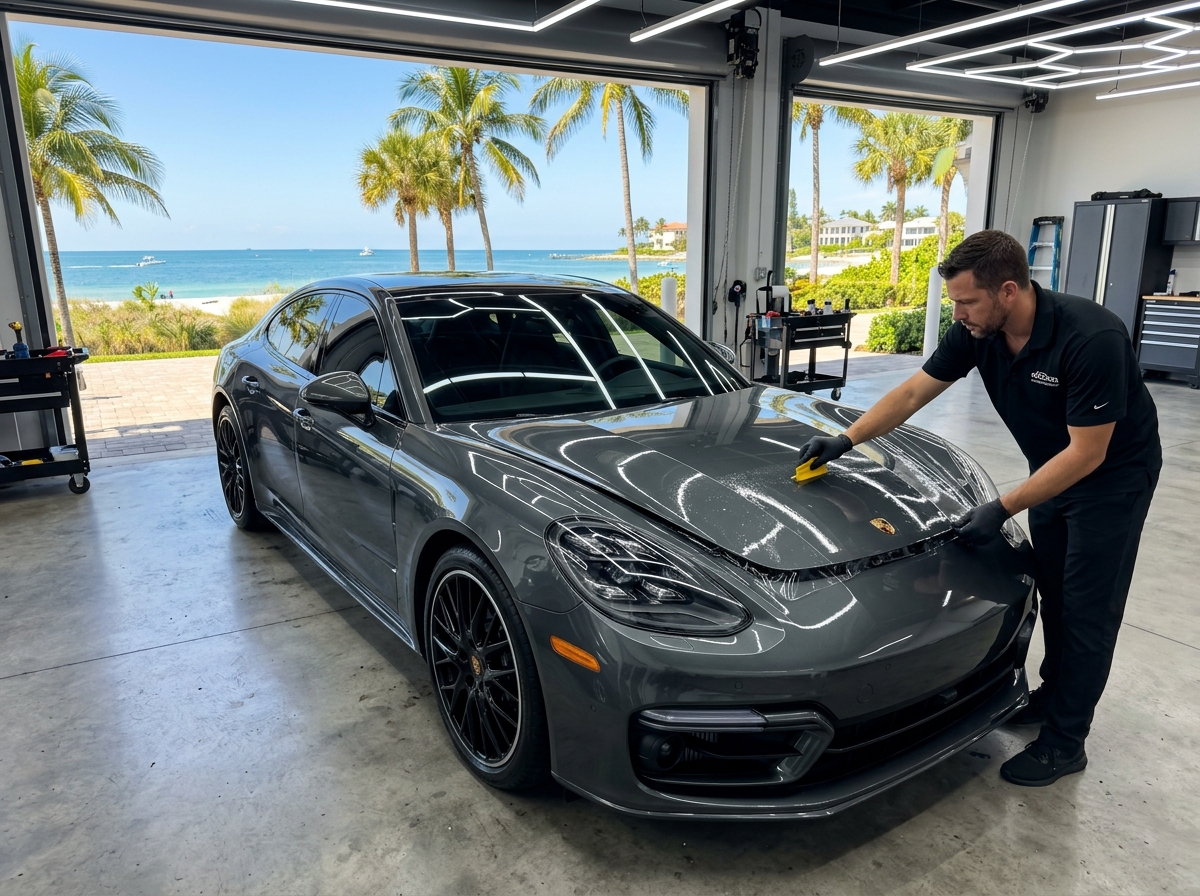
Paint protection film is a physical urethane layer commonly applied to high-impact areas, such as the front bumper, hood edge, mirror caps, rocker panels, and door cups. Its purpose is to help absorb the effects of small road debris, light scuffs, and daily wear.
A ceramic coating is a bonded surface treatment that can improve gloss, make washing easier, and help limit the grip of some contaminants. It does not make paint scratch-proof, chip-proof, or maintenance-free. For a Naples commuter who regularly drives I-75, US 41, or coastal routes, paint protection film may make sense for high-wear areas, while a coating may make the rest of the vehicle easier to clean.
Build a Heat-Smart Washing Routine
Washing a hot vehicle in full sun can cause soap and water to dry too quickly. That increases the likelihood of streaks and mineral spotting, particularly on dark paint and glass. When possible, wash during cooler morning or evening hours and work one section at a time.
- Rinse away loose sand, dust, and road film before touching painted surfaces.
- Use separate wash tools for wheels and painted panels.
- Apply a pH-balanced automotive soap and rinse frequently.
- Dry with clean microfiber towels or a suitable air blower rather than allowing water to bake onto the finish.
- Remove bird droppings, bugs, and tree sap promptly, but do not scrub dried debris with a dry towel.
Protect the Interior From Sun and Moisture
A reflective windshield sunshade remains one of the simplest tools for a vehicle parked outdoors. It reduces direct sunlight on the dash and steering wheel, while window film can support cabin comfort from the sides and rear. Clean interior surfaces with products designed for the specific material, and avoid heavy, shiny dressings that can create windshield glare.
After beach trips or heavy rain, quickly remove wet towels, umbrellas, floor mats, and gear. Moisture trapped beneath mats or inside storage compartments can cause odors and encourage mildew growth, especially during Naples’ humid months.
A Practical Care Schedule for Naples Drivers
- Weekly: Remove visible dirt, clear leaves from drains, and check tire condition.
- Monthly: Clean glass, inspect film edges, and look for new chips, water spots, or fading trim.
- Every three months: Deep-clean wheels, door jambs, rubber seals, and interior touch points.
- Before storm season: Check tires, wipers, lights, battery condition, and emergency supplies.
- Twice each year: Review the condition of paint protection, coatings, exterior sealants, and window film.
Conclusion
Effective Naples car care starts with consistent basics: shade when available, clean glass, careful washing, quick contaminant removal, and regular inspections. Window film, paint protection film, and ceramic coatings can provide meaningful support when they align with the vehicle’s actual exposure and maintenance needs. A measured approach helps keep a Florida vehicle more comfortable, cleaner, and easier to maintain through every hot, rainy, and coastal season.