In Florida, a white Christmas usually means white sand, not snow. Forcing a winter wonderland onto a palm-lined patio often looks out of place, and artificial snow can melt into a sloppy mess in coastal humidity. The real solution is to lean into what makes a Florida holiday distinctive: warm air, ocean breezes, and light. If you want your yard to feel festive without fighting the climate, the best outdoor Christmas light projectors for coastal weather can handle salt air and rain far better than traditional inflatables or delicate string lights. This guide shows you how to build a celebration that fits the Sunshine State.
Quick Answer
To create a festive Florida Christmas without artificial snow, focus on light, color, and coastal-friendly materials instead of winter-themed props. Use weather-resistant light projectors, warm-white or tropical-colored LEDs, nautical decorations like shells and palm fronds, and inflatables rated for high wind. Avoid cotton batting, fake snow sprays, and paper decorations that wilt in humidity. The goal is a celebration that looks intentional in warm weather, not a forced imitation of a cold-climate holiday.
Key Takeaways
- Artificial snow fails in Florida because humidity, heat, and rain turn most fake snow products into residue or mush within hours.
- Light-based decorations, especially projectors, are the most reliable way to create holiday atmosphere in coastal conditions.
- Materials matter: salt air corrodes cheap metal, and UV exposure fades fabric quickly, so choose rated outdoor products.
- A tropical color palette and nautical props look better than snowmen and reindeer in a warm-weather setting.
- Wind is the hidden problem on Florida coasts, so anchoring and weight ratings matter as much as waterproofing.
Why Artificial Snow Fails in Florida (And What to Do Instead)
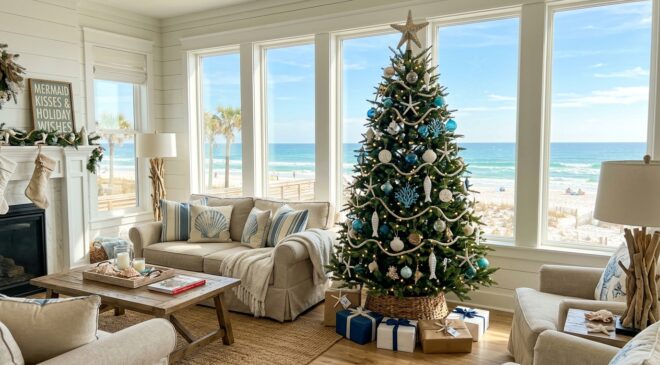
Artificial snow is designed for cold, dry conditions. In Florida, the same products that work in Ohio or Colorado often fail within a day. Spray snow flakes off in humidity. Cotton batting absorbs moisture, grows mildew, and attracts insects. Snow blankets and fake snow pellets turn into a soggy, discolored mess on driveways and lawns after a single afternoon shower.
The bigger issue is visual. Even if fake snow held up, it looks wrong against palm trees, stucco walls, and green lawns. Rather than fighting that contrast, use it as a design advantage. Florida Christmas decorations work best when they embrace warmth: bright light, vivid color, and coastal textures.
What to use instead of fake snow
- Light projectors that cast patterns onto walls, roofs, or landscaping without physical material
- Warm-white or multicolor LED strings wrapped around palms, railings, and pergolas
- Floodlights aimed at palms or architectural features to create a dramatic night look
- White sand, crushed shell, or white gravel in planters for a subtle wintry nod without the mess
- Frosted or metallic ornaments that suggest cold without melting
These options survive rain, humidity, and heat far better than any artificial snow product, and they read clearly as holiday decor even when it is 78 degrees outside.
What Makes a Light Projector Work in Coastal Weather
Not every projector sold for Christmas is built for Florida. Coastal conditions combine salt spray, high humidity, intense UV, and sudden storms. A projector that works fine inland may fail within weeks near the beach. The four factors that matter most are ingress protection rating, housing material, sealing quality, and mounting stability.
IP rating is the first filter
Look for an IP65 or higher rating. IP65 means the unit is dust-tight and protected against water jets from any direction. IP44 is only splash-resistant and is not enough for exposed coastal installation. IP67 or IP68 is even better if the projector will sit low to the ground or in an area prone to standing water.
Housing material and corrosion
Salt air corrodes cheap metal fast. Aluminum housings with a powder-coated finish hold up better than bare steel or thin plastic. Avoid any projector with exposed screws or brackets made of untreated metal, because those are the first points to rust. ABS plastic housings are common and acceptable if the sealing is good, but they can become brittle under prolonged UV exposure.
Sealing and lens quality
Rubber gaskets around the lens and cable entry are the weak point on most projectors. A double-sealed design, or one with a recessed cable port, reduces the chance of water intrusion. Glass lenses resist scratching and UV clouding better than acrylic, though high-quality polycarbonate is a reasonable compromise for the price.
Mounting and wind
Coastal wind is underestimated. A projector mounted on a stake in soft sand will tilt or fall in a storm. Ground stakes should be pushed into firm soil or secured with weights. For roofs or walls, use stainless steel brackets and hardware. If you are renting or cannot drill, weighted bases filled with sand or water are a practical alternative.
Which Projector Type Fits Your Florida Setup
Projectors fall into a few practical categories, and the right one depends on what you want to light and how much space you have. Here is how they compare for typical Florida homes.
| Type | Best for | Coastal considerations |
|---|---|---|
| Single-image projector | Small yards, apartment balconies, front doors | Lightweight, easy to reposition; still needs IP65 if left outside |
| Motion projector | Driveways, garages, large walls | More internal electronics, so sealing quality matters more |
| Laser projector | Landscaping, trees, wide coverage | Bright and weather-tolerant, but can be harsh on nearby windows |
| LED flood projector | Palms, architecture, pools | Heavy but very durable; requires secure mounting against wind |
For most Florida homes, a combination works best: one motion projector covering the front of the house and a couple of flood projectors aimed at palms or landscape features. That gives depth without the clutter of many small units.
Building a Coastal Christmas Palette
Color is where Florida Christmas decor can either shine or look confused. Red and green still work, but they read differently against green lawns and blue water. Adding coastal tones softens the contrast and makes the whole display feel intentional.
Palettes that work well
- Warm white and gold: classic, elegant, and highly visible against stucco and palms
- Aqua, teal, and white: a nautical look that suits beachside homes
- Red, coral, and white: tropical warmth without losing holiday identity
- Multicolor: playful and family-friendly, but best used on a single focal point rather than the whole yard
Stick to two or three colors across the whole display. Too many competing colors make a yard look chaotic, especially when projectors are casting patterns at the same time.
Props that make sense in warm weather
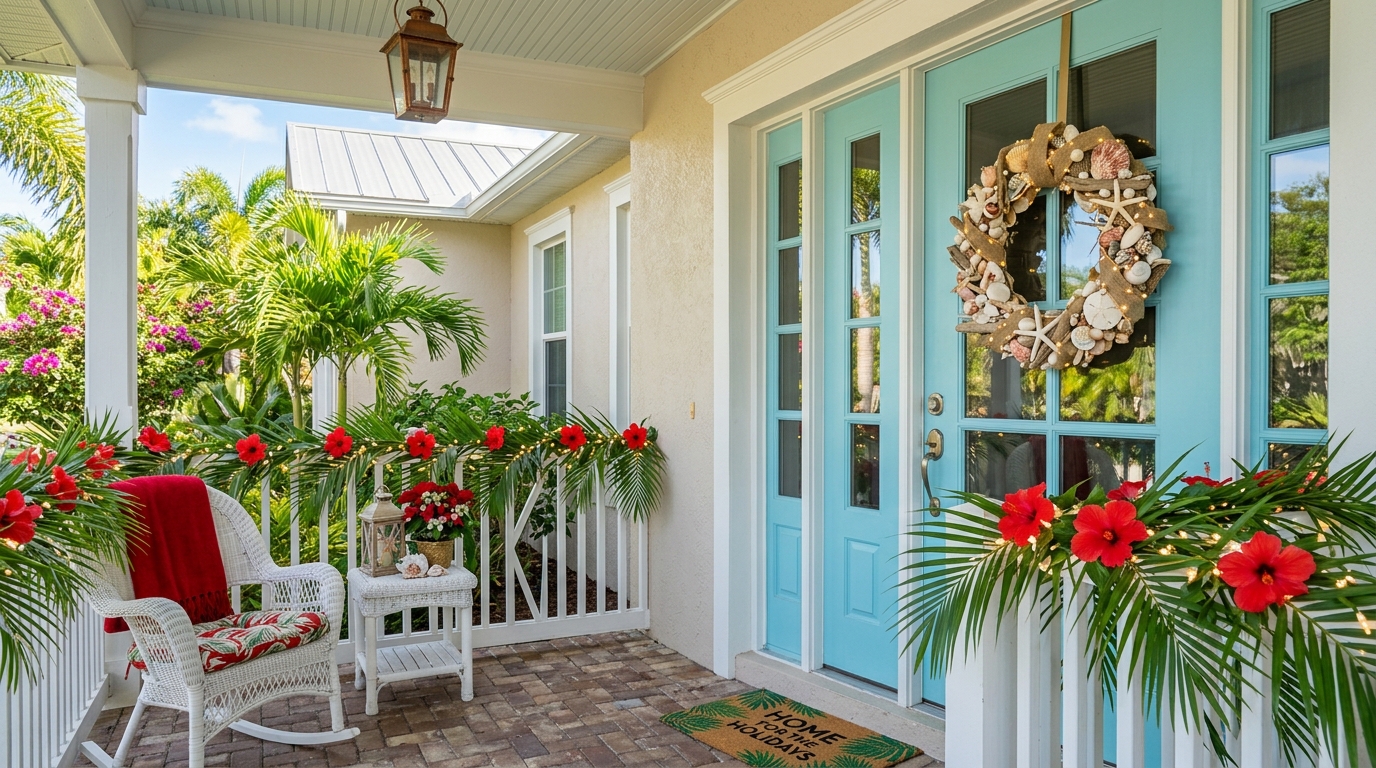
- Lighted palm trees and palm-wrapped string lights
- Nautical ornaments such as anchors, shells, and fish
- Flamingos in Santa hats or with light-up scarves
- Coastal-colored lanterns and rope-wrapped planters
- Wreaths made from sea grape leaves or magnolia
These pieces fit the environment, so they do not look borrowed from another climate.
Step-by-Step: Setting Up a Florida Christmas Display
- Plan your focal points. Choose one main feature, such as the front wall of the house or a large palm, and build around it.
- Check power access. Outdoor outlets should be GFCI-protected. Use outdoor-rated extension cords and keep connections off the ground.
- Mount projectors securely. Use stakes in firm soil, weighted bases on patios, or stainless brackets on walls.
- Aim before nightfall. Position and test projectors in daylight to save time, then fine-tune after dark.
- Add landscape lighting. Uplight palms or hedges for depth behind the projector patterns.
- Layer in props last. Add wreaths, planters, and nautical accents after the lighting is set.
- Weatherproof connections. Wrap outdoor cord junctions with waterproof covers or elevate them above splash zones.
- Set a timer. Use a smart plug or timer to run lights during evening hours and avoid unnecessary wear, For more creative ideas, check out a guide to the christmas window decorations: get ready to celebrate.
Common Mistakes to Avoid
- Buying indoor-rated projectors. They fail quickly outdoors, especially near the coast.
- Skipping the IP rating check. A low rating means water intrusion and a dead unit within weeks.
- Overloading a single circuit. Christmas lighting adds up fast, and tripped breakers are a common holiday frustration.
- Ignoring wind. Unsecured decorations become projectiles in a coastal storm.
- Using fake snow sprays on stucco or pavers. They leave residue that is difficult to remove.
- Mixing too many color schemes. It reduces the visual impact of every element.
Frequently Asked Questions
Can I use artificial snow in Florida without it melting?
In most of Florida, no. High humidity and warm temperatures break down spray snow, cotton batting, and fake snow blankets quickly. Even in cooler parts of the state, rain and dew ruin them within days. Light-based effects are a more reliable alternative.
Are outdoor light projectors safe in salt air?
Yes, if they are rated IP65 or higher and have corrosion-resistant housings. Salt air accelerates rust on cheap metal, so stainless or powder-coated aluminum hardware is a better choice near the coast.
How many projectors do I need for a typical Florida yard?
Most homes do well with two to four projectors: one for the main house facade, one or two for landscaping or palms, and possibly one for a driveway or side wall. Fewer, well-aimed units look better than many scattered ones.
Will projectors damage my landscaping or palms?
Projectors themselves do not damage plants, but heat from high-wattage fixtures can stress leaves if placed too close. Keep a reasonable distance and avoid pointing intense lights directly at young or sensitive plants for long periods.
What is the biggest weather risk for Florida Christmas decorations?
Wind, followed by rain and salt corrosion. Even a brief coastal storm can knock over unsecured decorations. Weighted bases, stainless hardware, and proper anchoring solve most of the problem.
Do I need GFCI outlets for outdoor Christmas lights?
Yes. GFCI protection is required for outdoor outlets in most modern homes and is essential for safety around wet conditions. If your outdoor outlets are not GFCI-protected, use a portable GFCI adapter or have one installed.
Conclusion
A festive Florida Christmas does not need snow to feel like the holidays. It needs light, color, and materials that can handle warm, salty, and sometimes stormy conditions. Focus on weather-rated light projectors, a simple coastal-inspired color palette, and secure mounting, and your display will look intentional rather than out of place. Start with one strong focal point, build outward, and let the Florida climate shape the design instead of fighting it. The result is a celebration that fits the place you actually live.