Making pasta from scratch is one of the most satisfying things you can do in the kitchen. There is something deeply rewarding about rolling out fresh dough and cutting it into smooth, even strips. However, doing this entirely by hand can be tiring and inconsistent. That is where a good manual pasta maker comes in.
Whether you are a beginner or an experienced home cook, choosing the right tool makes a real difference. This guide will walk you through everything you need to know before making a purchase.
Why a Manual Pasta Maker Is Worth It
Fresh pasta has a texture and flavor that dried, store-bought pasta simply cannot match. It cooks faster, absorbs sauce better, and gives your meals a more authentic Italian feel. Additionally, making pasta at home gives you full control over the ingredients. You can choose whole wheat flour, semolina, or even add spinach and turmeric for color and nutrition.
A hand crank pasta machine is the most popular choice for home cooks who want consistent results without a large investment. It is compact, easy to store, and requires no electricity. Therefore, it works anywhere, including small apartments or outdoor kitchens.
Key Features to Look for in a Manual Pasta Maker
Not all pasta makers are built the same. Before you buy, there are several important features to consider.
Build Quality and Materials
The body of the machine matters a great deal. Stainless steel is the most common and recommended material because it is rust-resistant, durable, and easy to clean. Avoid machines with plastic rollers, as they tend to warp over time and produce uneven pasta sheets.
Look for a machine with a solid, heavy base. A heavier machine stays in place while you crank, which makes the whole process smoother. Many models come with a clamp to secure the machine to your countertop. This is a useful feature, so check that the clamp fits your counter thickness.
Thickness Settings
Good manual pasta makers offer multiple thickness settings, usually ranging from one to nine. Thinner settings are ideal for delicate pasta like angel hair or lasagna sheets. Thicker settings work better for tagliatelle or pappardelle. A machine with at least six settings gives you the most flexibility.
Cutting Attachments
Most machines come with at least two cutting attachments: one for spaghetti and one for fettuccine. However, some models include additional attachments for tagliolini, linguine, or pappardelle. If you enjoy variety, look for a machine that either includes more attachments or allows you to buy them separately.
Ease of Cleaning
Pasta makers should never be washed with water. Moisture causes rust and damages the rollers. Instead, you clean them with a dry brush or a small wooden tool. Therefore, choose a machine with smooth, accessible rollers that are easy to brush out. Some brands include a cleaning brush with purchase, which is a nice bonus.
Types of Manual Pasta Machines
Understanding the different types helps you find the best match for your cooking habits.
Flat Roller Machines
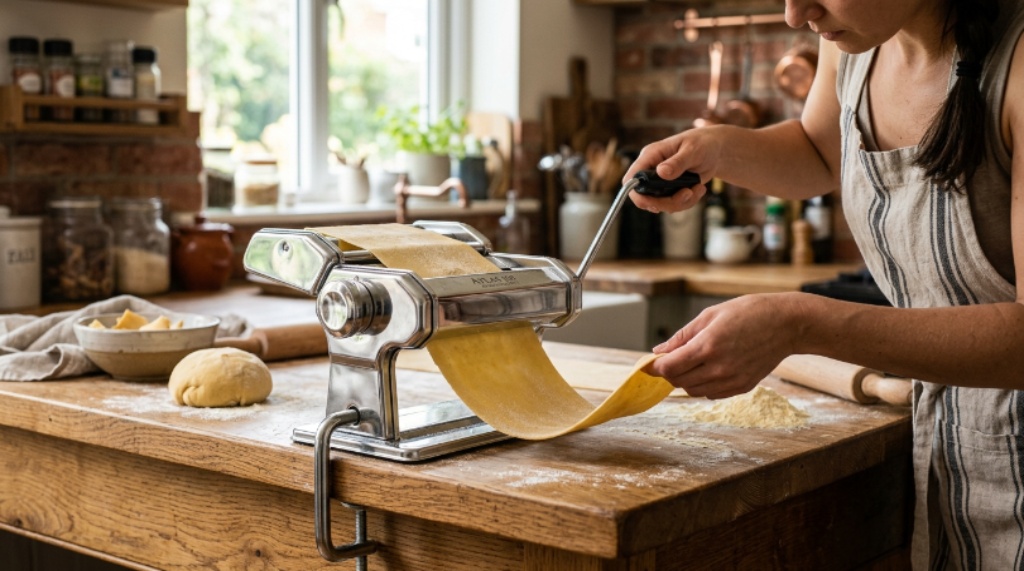
These are the most common type of homemade pasta tools on the market. They use two flat rollers to press and thin out the dough. You feed the dough through, fold it, and repeat the process until it reaches the desired thickness. Then you switch to the cutting attachment to shape it. These machines are straightforward to use and great for beginners.
Extruder-Style Manual Machines
These work more like a press. You push the dough through a die to create shapes like rigatoni, penne, or bucatini. They require stiffer dough and a bit more effort. Additionally, they are less common and usually more expensive. However, if you love short pasta shapes, they are worth exploring.
Best Pasta Types to Make with a Manual Maker
A hand crank pasta machine opens up a wide world of pasta shapes. Here are some of the easiest and most popular options to start with:
- Fettuccine: Wide, flat ribbons that pair well with creamy sauces
- Tagliatelle: Similar to fettuccine but slightly thinner, perfect for Bolognese
- Lasagna sheets: Rolled to a very thin setting and layered with filling
- Spaghetti: Long, round strands that work with almost any sauce
- Pappardelle: Broad, thick ribbons ideal for hearty meat ragus
Starting with fettuccine or tagliatelle is usually easiest for beginners. The wider cut is more forgiving and shows off the fresh pasta beautifully.

Tips for Getting the Best Results
Even the best machine will not help much if the dough is not right. Here are some practical tips to keep in mind.
Always let your dough rest for at least 30 minutes before rolling. This relaxes the gluten and makes the dough much easier to work with. If your dough keeps springing back, it needs more rest time.
Dust your dough lightly with semolina flour as you roll. This prevents sticking without making the dough too dry. Too much flour, however, can make the pasta tough and chalky.
Start at the widest thickness setting and gradually work your way to your target thickness. Jumping straight to a thin setting can tear the dough and clog the machine.
Popular Brands to Consider
Several brands have built strong reputations among home pasta makers. Marcato, an Italian brand, is widely regarded as the gold standard. Their Atlas 150 model is one of the most recommended homemade pasta tools available. Imperia is another Italian brand with a long history and excellent build quality.
For those on a tighter budget, brands like Pasta Queen and KitchenAid’s pasta attachment (used manually) also deliver solid performance. Always read recent user reviews before purchasing, as quality can vary between production batches.
How Much Should You Spend?
Price ranges vary widely. Entry-level machines start at around $25 to $40. These can work well for occasional use, but they may feel flimsy. Mid-range machines, priced between $50 and $100, offer better build quality and more attachment options. High-end models from Italian brands typically cost $100 and above. They are built to last decades and often come with more accessories.
If you plan to make pasta regularly, investing in a mid-range or high-end machine is worth it. A cheap machine that breaks after a few uses ends up costing more in the long run.
Conclusion
Choosing the right manual pasta maker comes down to a few key factors. Build quality, thickness settings, cutting attachments, and ease of cleaning are the most important things to evaluate. A hand crank pasta machine gives you the freedom to make fresh, delicious pasta at home with minimal effort. For most home cooks, a stainless steel flat roller machine with multiple thickness settings and at least two cutting attachments is the ideal starting point.
Additionally, pairing your machine with proper technique, such as resting the dough and dusting with semolina, will elevate your results significantly. Whether you are making a simple weeknight fettuccine or an elaborate lasagna for guests, the right machine makes the process enjoyable and the outcome impressive.
Start with a trusted brand, invest in quality, and enjoy the process of bringing authentic Italian cooking into your home kitchen.
Frequently Asked Questions
What is the best manual pasta maker for beginners?
The Marcato Atlas 150 is widely considered the best option for beginners. It is durable, easy to use, and produces consistent results across a range of pasta types.
How do I clean a manual pasta machine?
Never use water to clean a pasta machine. Instead, use a dry brush or a toothpick to remove dried dough. Wipe the exterior with a dry cloth. Store it in a dry place to prevent rust.
Can I make gluten-free pasta with a manual pasta maker?
Yes, you can. However, gluten-free dough behaves differently and can be more fragile. Use a recipe specifically designed for gluten-free pasta and handle the dough gently during rolling.
How many thickness settings do I need?
A machine with at least six thickness settings gives you enough variety for most pasta types. Nine settings provide even more control, especially for very thin pasta like capellini or delicate lasagna sheets.
Is a manual pasta maker better than an electric one?
Manual machines are quieter, more affordable, and easier to control. Electric machines are faster and better for large batches. For most home cooks making pasta a few times a month, a manual machine is the more practical and economical choice.